
“How to Avoid Remote Job Scams”
Working from home is more popular than ever, and that means opportunities are everywhere. Unfortunately, so are scams. For every legitimate remote job, there’s a fake posting waiting to steal your time, money, or personal information.
If you’re just starting your work-from-home journey, here’s a practical guide to spotting scams and finding legit jobs.
🚩 Red Flags of Remote Job Scams
- They Demand Money With No Clear Return
In most traditional jobs, you should never have to pay to get hired. Be careful of listings that ask for large fees for “starter kits” or “access to jobs.” 👉 Note: Some independent contractor platforms (like Arise or LiveOps) do charge for certification or training. This isn’t automatically a scam — but you should research the company, understand exactly what you’re paying for, and decide if it makes sense for your career goals. - The Pay Sounds Too Good to Be True
If a posting promises $2,000 a week for simple tasks like stuffing envelopes or basic data entry, it’s likely a scam. Real jobs pay fairly, but not unbelievably. - Vague Job Descriptions
Watch out for listings with little detail about the role, responsibilities, or company background. A lack of transparency is a big warning sign. - Unprofessional Communication
Emails full of typos, no company email address (like Gmail or Yahoo instead), or recruiters who dodge your questions are red flags. - Pressure to Act Quickly
Scammers push you to “sign up now” or “secure your spot immediately.” A real employer gives you time to think.
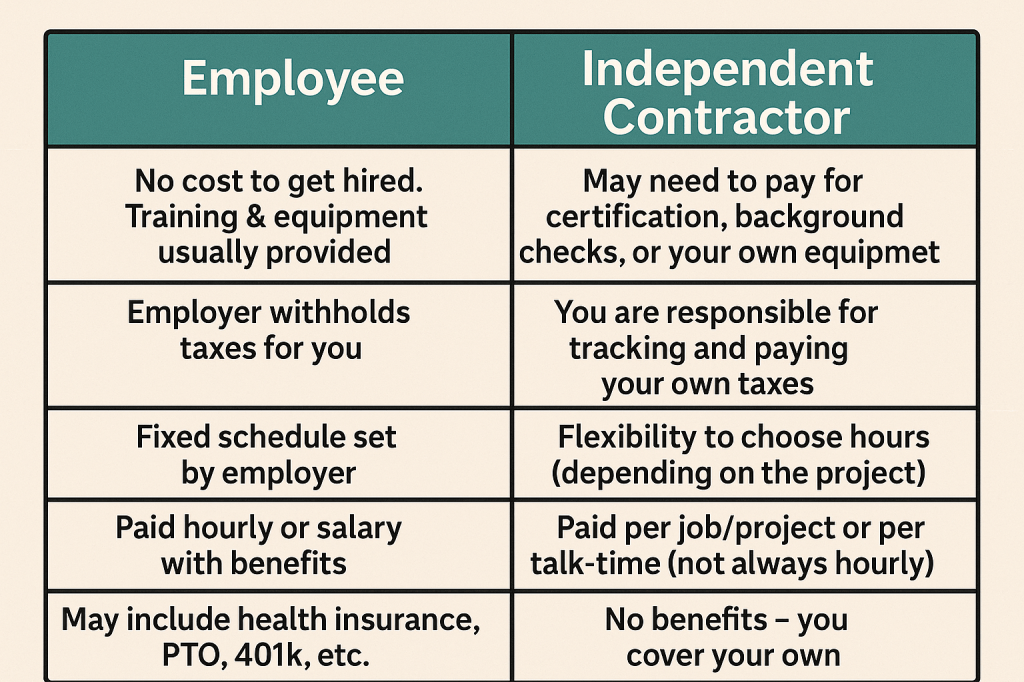
📊 Employee vs. Independent Contractor: What’s the Difference?

| Aspect | Employee | Independent Contractor |
|---|---|---|
| Upfront Costs | No cost to get hired. Training & equipment usually provided. | May need to pay for certification, background checks, or your own equipment. |
| Taxes | Employer withholds taxes for you. | You are responsible for tracking and paying your own taxes. |
| Schedule | Fixed schedule set by employer. | Flexibility to choose hours (depending on the project). |
| Pay Structure | Paid hourly or salary with benefits. | Paid per job/project or per talk-time (not always hourly). |
| Benefits | May include health insurance, PTO, 401k, etc. | No benefits — you cover your own. |
✅ How to Find Legit Remote Jobs
- Research the Company
Google their name + “scam” or “reviews.” Check LinkedIn to see if the company and employees are real. - Use Trusted Job Boards
Stick with sites like FlexJobs, Indeed, Remote.co, and LinkedIn. Many companies also post directly on their own careers page. - Ask Questions
Legit employers will answer questions about pay, training, equipment, and schedules. Scammers avoid details. - Trust Your Gut
If something feels “off,” it probably is. Don’t ignore those instincts.
🌟 Final Thoughts
Remote work is full of amazing opportunities — but staying safe is part of the job hunt. Protect your personal info, keep an eye out for red flags, and learn the difference between legit contract work and scam tactics.
With a little caution, you can avoid scams and land the real work-from-home job you deserve.

WFH Money Blog
 WFH Money
Leave a comment